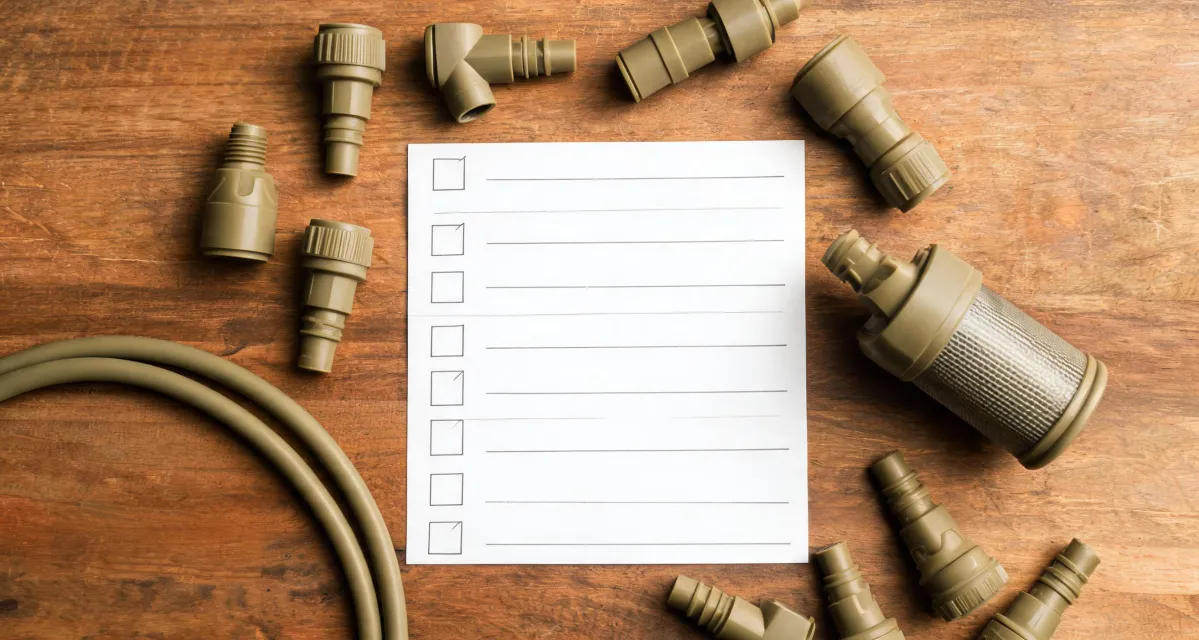
Two growers, same well, same field plan, order two drip irrigation kits on the same afternoon. The first reads the kit as a chain: clean the water, set the outlet pressure, then divide the flow into zones. The second compares valve count and price. By the end of the season the difference is not in the number of valves on the invoice; it is in whether the parts were ever matched to each other. This is a described buying situation, not a trial. The point is simple: a drip irrigation kit is worth buying on the strength of its filter and regulator. Zone valves are the easy part.
What a Drip Irrigation Kit Is Made Of
A drip irrigation kit is a matched set of components that takes water from a source, cleans it, drops it to the dripline's working pressure, and divides it into zones before the water reaches the drip lines. That definition is doing real work. Water moves through the kit in series, so the purchase comes down to three functions in order: clean, set pressure, divide. Each later part only sees what the earlier part let through, which means the filter and regulator set the ceiling on everything downstream.
The scope matters before you read a single kit label. The sources behind this checklist describe drip systems for vegetable production; they are not a teardown of one commercial kit. Nothing here is a brand ranking, a model review, or a promise that every box with the right words on it will perform the same. The checklist tests functions, and the supplier still has to answer for the specific parts.
Kits Versus Parts Bought One at a Time
Buying a kit settles sourcing and assembly. It does not settle matching. You still have to match the filter to your water source and the regulator to the dripline's stated working pressure, because those are decisions about your site, not about how neatly a supplier packed a box. A longer parts list is not a better kit if the list does not answer those two matches.
This is also where buyers meet the near-miss object: the globe valve. A globe valve controls pressure by constricting the water flow path. That sounds like regulation, but it is a flow restriction. The reason the distinction matters is that a restriction and a pressure reference behave differently as soon as flow changes, which is the next section's problem.
Why the Filter Comes Before the Regulator
Filters are essential to the operation of a drip system. Keeping the system free of debris is critical because most clogs will irreparably disable a system. The load-bearing word is irreparably. A dirty filter is not a cosmetic issue, and a clogged drip line is not maintenance you can pencil in for next month.
The filter is the first decision.
The source names several families: settling ponds, self-cleaning suction devices, sand separators, media filters, screen filters, and disk filters. They are options tied to the water source, not a ranking. A pond, a well, and a municipal line do not present the same cleaning problem, which is why the filter choice starts with a question about your water rather than a question about kit price.
Most clogs are not a later fix.
The first-principles chain is short. The drip lines and their outlets sit downstream of the filter, so whatever the filter passes becomes the clog risk further down. Because the filter is the last barrier before the narrow parts of the system, it decides how much work every later component gets to do. That is why it belongs before the regulator in the buying order, even though water physically passes through both.
What a Pressure Regulator Does That a Valve Cannot
Pressure regulators reduce the water pressure in the manifold, the pipeline feeding the drip lines, to the working pressure of the drip lines. Fixed-outlet and adjustable-outlet devices are both available across a wide range of flow rates. That is the evidence-based description; the buying question is whether your kit's regulator states an outlet pressure and whether that setting is fixed or adjustable.
A globe valve is not recommended for this job because any change in system flow rate or operating pressure also affects downstream pressure. The reason is mechanical: a constriction makes downstream pressure a function of flow, so the setting drifts whenever a zone opens or closes. Which means a valve is a throttle, while a regulator is a reference. If a kit uses a valve to claim pressure control, the claim is really about restriction, not about holding the dripline's working pressure.
That difference is not academic. A drip line is bought to run at a stated working pressure, and the regulator is the part that translates manifold pressure into that condition. If nobody can tell you what outlet pressure the kit's regulator is set to, you have not learned whether the kit matches your dripline. You have only learned that the box contains something with the word regulator on it.
Zone Valves, Water Meter, and Backflow Checks
Zone valves are how one water source serves several fields or sections. The source describes automatic or manually operated valves that open and close zones, including hand-operated gate or ball valves and automated electric solenoid valves controlled by a time clock, a water-need sensor, or a controller box. It also recommends a water meter to monitor total water usage and flow rate, and it calls for a backflow or anti-siphon valve when the source is a well or municipal supply, or when fertilizers or chemicals are injected.
Those items belong in the same conversation as the zone valves. A valve divides flow; it does not set pressure. Because zone count is a layout question, it comes after the regulator in the buying order, which is why valve count is the weakest way to compare two kits. Suppose a buyer plans two blocks on municipal water. In that hypothetical, backflow protection and metering are part of the zone design from the start, not accessories added after the first season's problems.
Where the Checklist Stops and Questions Begin
The checklist has a hard edge. No pump curve and no line-length or manifold specification were captured for this article, so it cannot rank brands, set a maximum run length, or state one working condition for every kit. A supplier who promises those numbers from a checklist alone is inventing them. The honest output of this check is a set of questions, not a universal specification.
Ask four things before ordering. What outlet pressure does the kit's regulator state, and is it fixed or adjustable? Which filter type does the supplier recommend for your source, whether well, municipal, pond, or ditch? Does the kit include backflow protection and a meter? Which dripline working pressure does the kit assume? Suppose your source is a pond and the supplier answers only that it will be fine. In that hypothetical, the non-answer has told you more than the price tag did: the checklist, not the catalog copy, is deciding.
Return to the two growers. The first one wrote down two lines before shopping: the water source and the dripline's stated working pressure. Then the filter, regulator, and zone valves were read against those lines in that order. The second one started with valve count and ended up with the same list in the wrong order. Your last move is the same as the first grower's: put those two lines on paper, read the kit's three components against them, and if the kit cannot answer both, keep looking. That is the tradeoff the checklist offers. It cannot choose a kit for you, but it can tell you when a kit has not yet earned the order.

Discuss this article
Use the sourcing form for procurement requests. Comments are subject to review and should not include payment details or confidential documents. Read our Privacy policy.